
From the Editors: In this essay (which we're releasing on a full moon) Dr. Markos shares some of humanity's beliefs through the ages about the moon. The common theme of these beliefs: the moon as an influence of change and instability. The dynamics of this flux - whether one believes them to be from a mysterious lunar influence or from somewhere else - are felt by all. Humans question, after unexpected turns of events, the extent to which they - or some other force - are responsible for their current state. Whether someone likes his current state or not, one thing is constant on this earth below the moon: change.
“What has been is what will be,” wrote Solomon three millennia ago, “and what has been done is what will be done, and there is nothing new under the sun” (Ecclesiastes 1:9; ESV). Under the sun! The phrase is used over two dozen times in Ecclesiastes, a sad refrain that captures the cyclical nature of life in our world, where all is in flux and yet nothing really changes. Toil and trouble, deceit and despair, evil and oppression; nothing but vanity, a striving after wind.
Such is life under the sun, where sickness, decay, and death are rampant and nothing gold can stay. Solomon imagines our fickle world as hovering under the sun. A classical Greek or Roman or a medieval Christian would have said the same, but he would have located our shadowy abode under the moon. For pagan and Christian alike, we lived, not sub-solar, but sub-lunar.
Below the moon all matter is composed, in pure or mixed form, of the four elements of earth, air, fire, and water.
Even in the late Renaissance of the seventeenth century, the metaphysical (baroque) poet John Donne retains the classical-medieval distinction between life below and above the moon:
Dull sublunary lovers' love
(Whose soul is sense) cannot admit
Absence, because it doth remove
Those things which elemented it. (“A Valediction: Forbidding Mourning,” lines 13-16)
In the changeable realm beneath the moon, absence rarely makes the heart grow fonder. Such is the instability of mortal, earth-bound hearts that when the beloved cannot be seen, the beloved is too often forgotten. Not so for lovers who are able, by the power of their love, to transcend, if briefly, the inconstancy of our sub-lunar realm.
The pre-Socratic philosophers of the sixth and fifth centuries BC could not agree on the nature of reality. Some, like Heraclitus, argued that everything is in constant flux, so much so that no one can step in the same river twice. Others, like Parmenides, held that motion is an illusion; the nature of reality is fixed and unchanging. It fell to Plato to resolve this pre-Socratic dilemma.
Heraclitus and Parmenides, as it turned out, were both right; they were just referring to two different realms. Our world, what Plato called the World of Becoming, is indeed in a perpetual state of variation and decay. In contrast, the heavens, what Plato called the World of Being, are stable and perfect. We live in a two-tiered universe of change below and stasis above. There is even a signpost to mark the transition between the two: the moon.
The medievals, it turns out, were right to believe that we live in a sympathetic universe where motions above affect motions below.
Below the moon all matter is composed, in pure or mixed form, of the four elements of earth, air, fire, and water. By the process of condensation, fire becomes air becomes water becomes earth. By the opposite process of rarefaction, earth becomes water becomes air becomes fire. Above the moon, the dance of the four elements is replaced by a single fifth element (quintessence in Latin) that does not decay or lose its integrity: ether.
Below the moon, Dame Fortune continually spins her wheel, causing the fates of men and nations to rise and fall, wax and wane. The circle is finally one of futility, for the king of today is the beggar of tomorrow, while the smallest of the small may rise suddenly to the height of success—until, the fickle lady turns her wheel again, and he is thrown down and forgotten. Above the moon, the seven medieval “planets” (Moon, Mercury, Venus, Sun, Mars, Jupiter, Saturn) are fixed in crystalline spheres made of ether. They spin continually in a circle, but, in the heavenly realm, Aristotle argued, movement in a circle is perfect, without change or decay (Metaphysics XII.8; Physics VIII.9).
As the moon spins in its crystalline sphere, it rays down on the earth an influence that draws a certain type of metal out of the earth and a certain type of personality out of people: the metal is silver; the personality type is lunacy (from the Latin world for moon: luna).
Before discussing the role lunar influence has played on the imagination of the past, I would like to point out four contemporary references to the influence of the moon. First, movies continue to be made, and stories to be written, about the werewolf, a man who, when the full moon shines down, transforms into a rampaging wolf. Whatever else the werewolf is, he is certainly a lunatic, a man out of his mind who has lost his reason, prudence, and moderation. And how does one kill a werewolf: not with a bullet made from lead or iron or gold, but one made from silver.
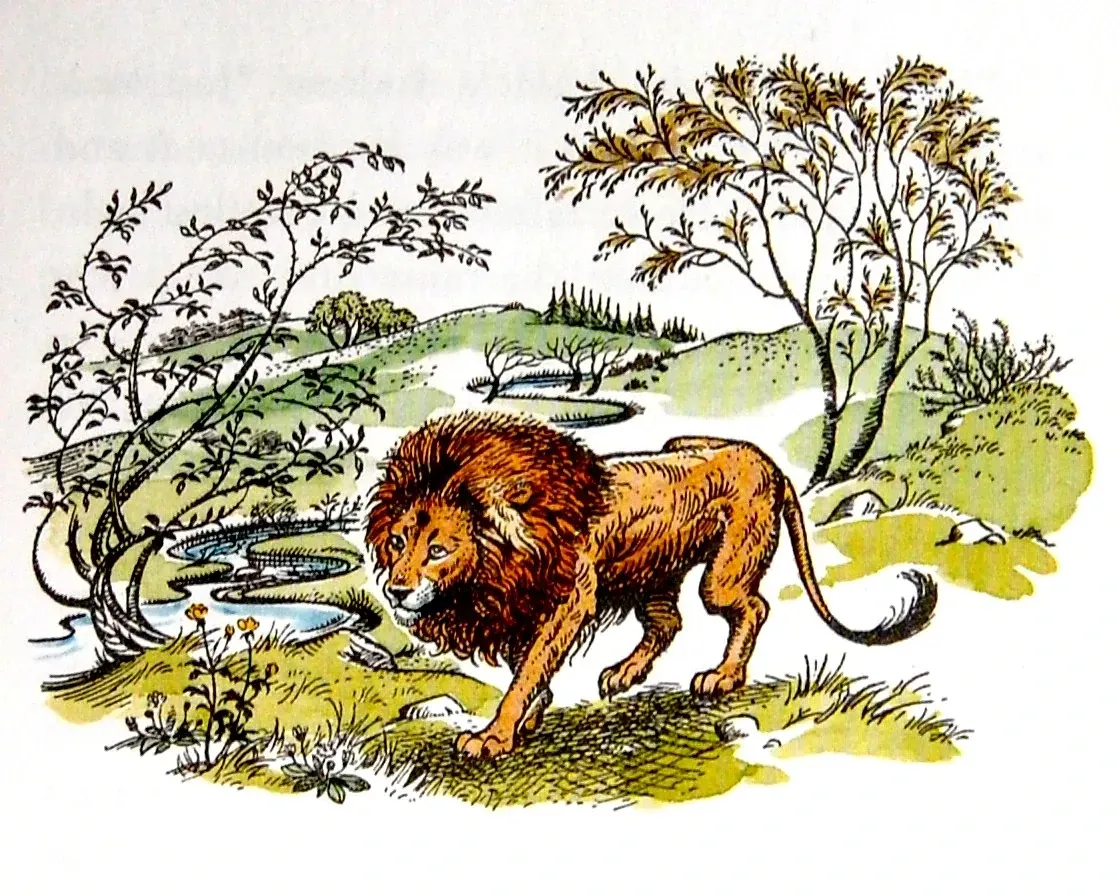
In The Silver Chair, one of C. S. Lewis’s Chronicles of Narnia, the influence of the moon helps to shape the story. As Michael Ward has convincingly argued in his magisterial Planet Narnia, the kidnapped prince Rilian is reduced to a lunatic by the green witch. He loses all memory of himself and is even compared at one point to Hamlet, who puts an antic (lunatic) disposition on to avoid scrutiny from his usurping uncle. For twenty-three hours a day, Rilian lives in a state of crazed self-forgetfulness; only during the one hour a day when he sits in the silver chair, does he remember who he is. As with the werewolf, silver “cures” the lunacy.
Many times over the last two decades, I have done research on whether more babies are born or hospitals are more hectic when the moon is full. The answer I have found is always the same. While statistics do not support either claim, as many as half of medical workers are convinced that births and hospital admits spike during the full moon. Such is the lasting hold that the medieval connection between the moon and lunacy has on the imagination.
Besides, science has proven the connection! Whereas Galileo believed that ocean tides were caused by the rotation of the earth, Newton demonstrated that the moon—a hunk of rock a quarter-of-a-million miles away from the earth—exerts a strong enough gravitational pull to cause a kind of lunacy in the waters of our planet. The medievals, it turns out, were right to believe that we live in a sympathetic universe where motions above affect motions below.
As C. S. Lewis documents in chapter 5 of The Discarded Image, medieval poems from Chaucer’s Canterbury Tales to Gower’s Confessio Amantis connect the moon to inconstancy. But it was not only the medieval poets who recognized lunar influence. Alchemists linked the moon to silver, even as they believed the power of the sun, whose influence draws gold from the earth and makes men wise and generous, could be harnessed to transmute base metals into gold.
I keep using the word medieval, but the belief that there exists a two-way trafficking between the two spheres of our two-tiered universe persisted for several centuries after the medieval belief in the unchangeable perfection of the World of Being was abandoned. It did not fully break down until the Enlightenment, though British poet Alexander Pope, the very embodiment of the Age of Reason, celebrates an ordered, hierarchical universe in his Essay on Man.
The eponymous hero of Shakespeare’s Othello does not hesitate to assert the first sphere’s influence on men: “It is the very error of the moon. / She comes more nearer Earth than she was wont / And makes men mad” (Act 5, scene 2). When Romeo begins to swear by the moon that his love is true, Juliet interrupts him: “O, swear not by the moon, th’ inconstant moon, / That monthly changes in her circled orb, / Lest that thy love prove likewise variable” (Act 2, scene 2). When Henry V woos the French princess Katherine near the end of the play, he explains that “a good heart, Kate, is the sun and the moon, or rather the sun and not the moon, for it shines bright and never changes but keeps his course truly” (Act 5, scene 2). Madness, inconstancy, and variability are all linked by iron (silver?) chains to the moon and its influence on the earth.
Nearly two generations later, Milton can still speak in Paradise Lost about “moon-struck madness” (Book 11, line 486). The moon is a potent symbol, especially for poets who are more sensitive to the relationships between people and their environment, including their cosmic environment. For all his genius, Newton stunted the Western imagination by relocating us to a clockwork universe that runs on fixed laws, without shedding influence on the world below.
Dante knew better. In his Paradise, he imagines souls dwelling in each of the seven planetary spheres, in keeping with the influence of each planet (the earth was not considered a planet, for planet in Greek means wanderer, and the earth did not move or spin). That is why in the sphere of the moon, Dante and Beatrice meet the blessed souls of those who, in life, were inconstant to their vows. Still, Dante, along with Catholic doctrine, makes it clear that we are volitional creatures with free will and are therefore not obliged to succumb to the influence from the stars.
Influence, whether from the moon or the other six planets, is neither fatalistic nor deterministic, as it is in doctrinaire astrology. Those in the sphere of the moon, Dante explains, could have chosen martyrdom over the breaking of their vow, though it would have been difficult to do so (Paradise IV). God’s gift of freedom—which Dante identifies as his greatest gift, the one in which we most resemble God (Paradise V)—is not abrogated by cosmic influence, though that influence does affect our decisions. Our will and responsibility are retained, as they are when a bad upbringing pushes us to a life of crime. So it is that the same heat from the sun turns mud into brittle clay but renders wax soft and pliable. It all depends on how we receive the influence.
Though we moderns rarely blame the moon for our bad decisions, we very often blame luck or chance or fate. Whether we realize it or not, our imaginations are still captivated by Dame Fortune, who, like the moon, brings endless alteration upon the earth by the ceaseless spinning of her wheel. The only thing constant about that fickle lady is her inconstancy.
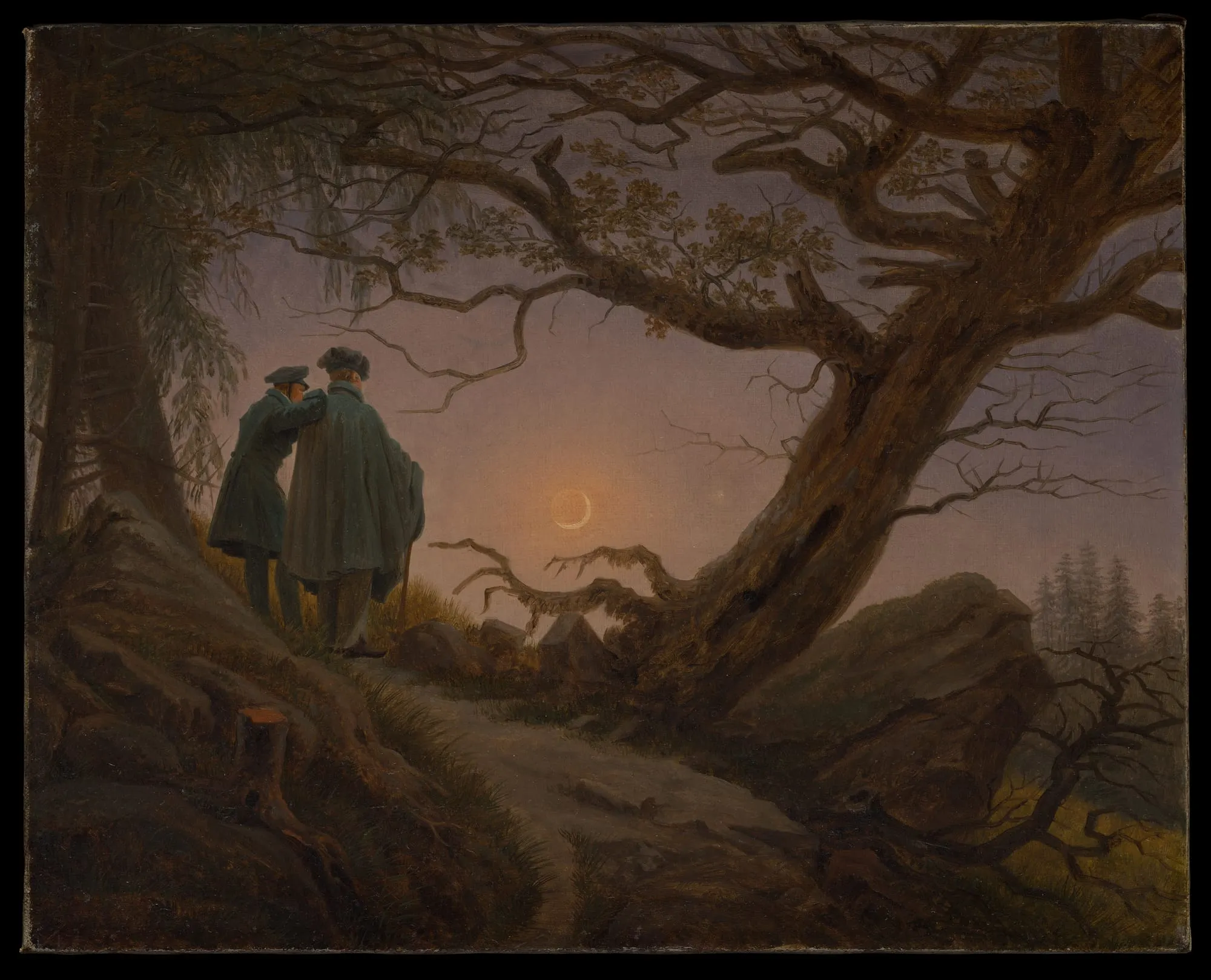
The moon is a potent symbol, especially for poets who are more sensitive to the relationships between people and their environment, including their cosmic environment.
The Wheel of Fortune as Western thinkers have known it from the Middle Ages to today is in great part the invention of Boethius, a Roman Christian who lived and wrote at the transition point between the classical and medieval ages. By blending imagery and ideas from paganism and Christianity, Boethius, in Book 2 of his Consolation of Philosophy, which he wrote in prison in 523, conjures the magnificent image of Dame Fortune. Boethius uses the image to help him process the vacillations of his own fate, which led him from being a consul of Rome and a friend and advisor to Theodoric, the Ostrogoth ruler of Rome, to being thrown into prison for treason.
Though the reader is not surprised when Boethius places the blame for his ill luck on Fortune (Fortuna in Latin), he is surprised when Boethius allows himself to be rebuked for his blame-shifting by Lady Philosophy, who appears to him in prison to bring him consolation. Rather than attack Lady Fortune, as she attacks the Lady Muses for failing to offer Boethius the consolation he needs, Lady Philosophy defends her misunderstood sister of the Wheel.
“What is it, mortal man,” Philosophy asks Boethius, “that has cast you down into grief and mourning? You have seen something unwonted, it would seem, something strange to you. But if you think that Fortune has changed towards you, you are wrong. These are ever her ways: this is her very nature. She has with you preserved her own constancy by her very change. She was ever changeable at the time when she smiled upon you, when she was mocking you with the allurements of false good fortune. You have discovered both the different faces of the blind goddess. To the eyes of others she is veiled in part: to you she has made herself wholly known” (translated by W. V. Cooper).
Boethius should not be surprised that Dame Fortune plays fast and loose with him. He might as well, we might add, be surprised by the waxing and waning of the moon! When Fortune changes, she is not being false, but true to her nature: it is only in being inconstant that she is constant. The fault lies not with her, but with Boethius for making her his mistress: “If you set your sails before the wind, will you not move forward whither the wind drives you, not whither your will may choose to go? If you intrust your seed to the furrow, will you not weigh the rich years and the barren against each other? You have given yourself over to Fortune's rule, and you must bow yourself to your mistress's ways.”
“Do not be deceived: ‘Bad company ruins good morals’” (1 Corinthians 15:33). So warns Paul, quoting a line from the pagan Greek playwright Menander. Lady Philosophy’s warning is similar. If you keep company with a faithless mistress, don’t complain when she runs off with your best friend! And don’t let such dalliances render you as fickle and inconstant as your mistress. Even so, Juliet implores Romeo not to swear by the moon, lest his oath be as capricious as the moon by which he swears it.
Eight centuries after Boethius saw his fortunes rise and fall, a Florentine poet also watched as his ride on the wheel carried him from being an influential prior in the city he loved to a life-long exile on a trumped-up charge of embezzlement. His name was Dante, and he could easily have fallen into excoriating Fortuna as a harlot. Instead, he took it upon himself to rework medieval cosmology. I explained earlier that as each planet spun in its crystalline sphere, it shed its unique influence upon the earth. What I did not mention then is that each planet was believed to be moved by an angelic being that medievals referred to as the intelligence of the sphere.


In Inferno VII, Dante transforms Dame Fortune from a moon-like figure of inconstancy to the intelligence of the earth, an immortal being who fulfills her duty by overseeing the cyclical rise and fall of individuals and nations on the one heavenly body that does not spin on its own. Like the virtuous man of courage, Fortuna sticks to her post and does not flee.
Let us not, then, attribute our bad decisions and erratic behavior to the influence of the moon or the turning of Fortune’s wheel. Let us, indeed, recognize a trafficking between the world above and the world below, and let us not reduce God’s glorious cosmos to an impersonal, clockwork universe without meaning or purpose; but let us, nevertheless, take responsibility for our own choices and actions and not shift the blame, as Adam did to Eve and Eve did to the snake (Genesis 3:12-13).